The seemingly simple task of deciding on VPS hosting vs cloud hosting services for your website often becomes a daunting task, especially for beginners who don’t have any experience or knowledge of web hosting. Which one is the best solution?
Which one is the best solution? Choosing the right one between VPS hosting and a cloud hosting provider depends on your website’s specific needs, amount of resources, budget, etc.
This comprehensive guide will provide you with facts and features that will help you choose the right web hosting according to the requirements of your website. Ensure your website’s continued growth without sacrificing affordability and performance.
What is VPS Hosting?
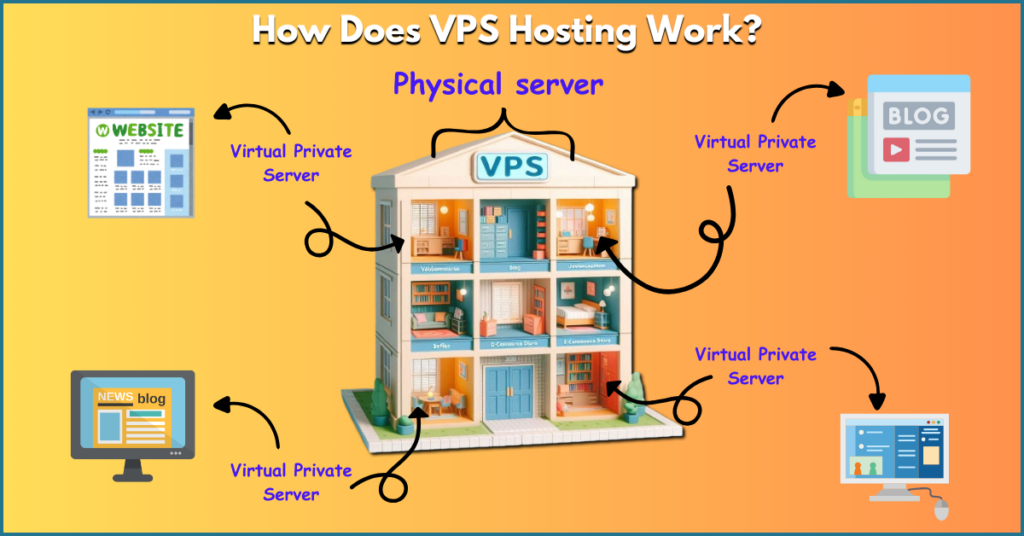
A VPS (Virtual Private Server) is an advanced version of shared hosting, where dedicated resources such as your own operating system, storage, and RAM are allocated on a single physical server for your website or applications. It acts as a standalone server for your website or blog.
What is Cloud Hosting?
Unlike dedicated and other types of web hosting, cloud hosting provides a flexible way to host your website and applications, where your website data is distributed across multiple servers in a vast network. Instead, unlike relying on a single physical machine, you can store and access your website data online.
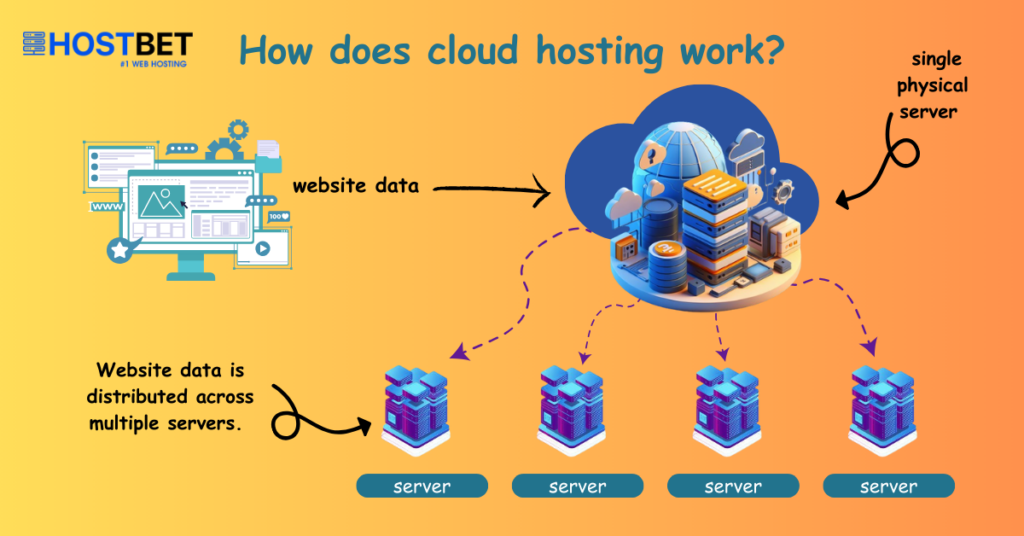
Imagine cloud hosting as a giant water tank of resources. You can use it as per your requirements, and similarly, you can use cloud hosting resources to grow or shrink depending on your website’s needs.
Key Differences: VPS Hosting vs Cloud Hosting
Resource Allocation
- VPS: Provides virtual dedicated resources (CPU, RAM, and storage) within a single physical server. You can also scale your resources as per your website’s needs.
- Cloud: Offers flexible resource allocation, where you can also scale up or down as needed.
Scalability
- VPS: Most VPS hosting providers offer VPS plans with one more resource upgrade (like CPU, RAM, or storage). This is often called “vertical scaling.” But sometimes some providers might have fixed resources. In this case, you need to migrate to a higher plan for additional resources.
- Cloud: Offers seamless scalability, where you can easily adjust resources on-demand.
Control and Flexibility
- VPS: Unlike cloud hosting, VPS provides more control, like server configuration and software installation, but requires technical expertise to manage the VPS hosting server.
- Cloud: While cloud hosting offers a user-friendly interface for managing resources, control might be limited compared to VPS.
Cost Comparison
- VPS: Typically, it has a fixed monthly cost based on resource allocation.
- Cloud: Often uses a pay-as-you-go model, where you pay for the resources you consume.
Security
- VPS: A virtual private server comes with a dedicated environment, but when it comes to security, it still depends on user management. Some reputable VPS hosting providers typically provide strong security to protect their servers and your website’s data.
- Cloud: While hosting provides strong security features and often includes built-in security measures.
Performance
- VPS: Unlike other web hosting, VPS delivers consistent performance due to dedicated resources, but sometimes it can be affected by hardware failures.
- Cloud: It is known for high performance through a network of servers with load balancing and redundancy for improved reliability and performance of your website.
Uptime
- VPS: Your website’s virtual server relies on the physical server and delivers uptime and consistent performance due to dedicated resources, but there is sometimes potential downtime during hardware failures.
- Cloud: While cloud hosting provides high uptime through redundancy and automatic failover across multiple servers.
Benefits of VPS Hosting
- Dedicated Resources: VPS hosting offers a virtual dedicated portion of a single physical server, ensuring uptime and consistent performance due to dedicated resources.
- Increased Control: Users have more control compared to cloud hosting, such as root access or administrative privileges, which allow server configuration, software installation, and optimization.
- Cost-Effective: If we compare it to dedicated servers, VPS hosting provides a more affordable option while providing better performance than shared hosting.
- Scalability: Most VPS hosting providers offer VPS plans with one more resource upgrade (like CPU, RAM, or storage). Some providers might have fixed resources. In this case, you need to migrate to a higher plan for additional resources.
- Predictable Performance: Consistent performance due to dedicated resources. makes it the best solution for websites with predictable traffic patterns.
Drawbacks of VPS Hosting
- Technical Expertise: Unlike shared hosting or cloud hosting, managing VPS hosting requires some technical knowledge, like accessing a control panel, troubleshooting minor issues, etc.
- Single Point of Failure: Dependency on a single physical server can be affected by hardware failures that can lead to potential downtime.
- Less Beginner-Friendly: If you’re a beginner, then it might not be the best solution for you, especially when you are in the early stages of learning. shared hosting excellent options for beginners
Benefits of Cloud Hosting
- Scalability: Offers seamless scalability, where you can easily adjust resources on-demand during traffic spikes.
- High Availability: Downtime is reduced by redundancy across multiple servers.
- Cost-Efficiency: The pay-as-you-go model’s costs depend on your resource usage.
- Advanced Features: Cloud hosting comes with advanced features like load balancing, auto-scaling, and content delivery networks (CDNs).
- Global Reach: Cloud providers typically have data centers worldwide, where your website data is distributed across multiple servers, offering low latency for users in different regions.
Drawbacks of Cloud Hosting
- Potential for Higher Costs: This can be more expensive than VPS hosting due to consistent resource usage.
- Security Concerns: While cloud hosting providers offer strong security, sometimes data breaches can impact multiple users.
- Internet Dependency: Cloud hosting services rely on a stable internet connection if any disruptions can impact your website or application performance and uptime.
VPS Hosting vs Cloud Hosting: Which is Right for You?
While VPS and cloud hosting are the best options per website requirements, only key differences exist between infrastructures and how resources are allocated to websites.
VPS Hosting
VPS hosting is an ideal solution for websites with higher steady traffic that require specific resources, like individual businesses, eCommerce websites, high-traffic blogs, web application hosting, and development and testing environments that need more control and flexibility than shared hosting.
Cloud Hosting
Cloud hosting is an ideal choice for unpredictable spikes of traffic that websites need to scale quickly, where users can easily scale up their resources per the website’s requirements to handle sudden spikes in traffic.
Looking for powerful and cheap VPS hosting solutions? HostBet offers affordable VPS hosting, specially designed to meet the needs of growing businesses and bloggers, with seamless scalability, top-tier security, and exceptional performance. Why are you waiting? Experience the power of a dedicated server without breaking your budget.
Final Thoughts on VPS Hosting vs Cloud Hosting
Choosing the right hosting between VPS hosting vs cloud hosting typically depends on your website’s specific requirements, like budget, traffic, and technical expertise. A VPS provides a virtual machine where dedicated resources are allocated on a single physical server for your website or applications. It acts as a standalone server for your website or blog, and it is ideal for predictable traffic patterns and users comfortable with server management. While cloud hosting is an ideal choice for unpredictable spikes of traffic that websites need to scale quickly,
Some Frequently Asked Questions
Which is best, VPS or cloud hosting?
VPS hosting is an ideal solution for websites with higher steady traffic that require specific resources, like individual businesses, eCommerce websites, high-traffic blogs, and web application hosting, while cloud hosting is an ideal choice for unpredictable spikes of traffic that websites need to scale quickly.
Is VPS cheaper than the Cloud?
Cloud hosting often uses a pay-as-you-go model, where you pay for the resources you consume, which can be a cost-effective resource per resource. While VPS hosting typically has a fixed monthly cost, that’s why VPS is generally cheaper than cloud hosting.
Which company is best for VPS?
Looking for powerful and cheap VPS hosting solutions? HostBet offers affordable VPS hosting, specially designed to meet the needs of growing businesses and bloggers, with seamless scalability, top-tier security, and exceptional performance.
Is VPS hosting good?
Yes, Upgrading to a VPS host offers several advantages over shared hosting or any other web hosting, It offers a good balance between affordability and power.